Development is no longer an isolated project; it is an ongoing operational standard. The innovation company Forum Virium Helsinki supports Helsinki’s social, health, and rescue services in this endeavour. Over two decades, this collaboration has delivered new operational models, services, and technologies, alongside vital insights into the needs of both staff and patients.
At the core of Helsinki’s evolution is a commitment to resident well-being. In a vibrant and secure city, residents navigate easily, access services efficiently, and enjoy a seamless everyday life. The city’s development strategy aims to optimise both the urban environment and its social, health, and rescue services (Sotepe).
Forum Virium Helsinki has partnered with the city for nearly twenty years to achieve this goal. The work involves developing services, gathering data, streamlining processes, and experimenting with new devices and technologies. Through both triumphs and setbacks, this cooperation has illuminated what residents and staff expect from modern solutions. Over the years, robots have assisted nurses, drones have aided emergency care, and digital services have fortified everyday life.
”Development is no longer a separate project for the city, but it has become an ongoing way of operating and a shared learning process.”
– Anne Tiihonen, Digital Project Manager for the Social Services, Health Care and Rescue Services Division
Through dozens of agile pilots conducted in real-world environments, Helsinki has adopted pre-evaluated software and hardware, identified new areas for improvement, and learned to utilise tools like virtual reality headsets and remote connections more expansively. Crucially, even the agile pilots that fail to produce ready-made services hold significant value. The objective is to identify dead ends rapidly, preventing misguided investments and saving taxpayers’ money. In 2025 alone, Sotepe implemented more than ten agile pilots.
Agile Pilots Provide Insights for Social and Health Care
Forum Virium Helsinki drives urban development across multiple fronts, specifically by piloting new services, technologies, and operational methods. A couple of months long agile pilots in real-world settings remain a proven strategy for exploring innovations and identifying improvements. There have been tens of pilots during the years and the method continues to be used.
During these agile pilots, solutions are co-developed with actual users to address specific needs. While the experimented technology is sometimes ready for immediate deployment, the primary benefit often lies in understanding the broader market and how these innovations integrate into public sector services. The strength of this agile pilot culture is that even the agile pilots that do not advance are invaluable. If an experimented device or application fails to align with the demanding routines of social and health care professionals, the resulting data directs the city’s future procurements.

Typically, the agile pilots facilitate a dialogue between entrepreneurs, residents, and city experts. They provide companies with direct feedback on how to tailor products for the public sector. For the city, they highlight available innovations and development trajectories. For residents, these agile pilots demonstrate a tangible investment in their well-being and offer a platform to participate in urban development.
Over the years, Helsinki has piloted with remote connections for home care, hospital navigation map services, self-service measurement stations, safety-enhancing sensors, and augmented reality for rehabilitation. A highly valuable, recurring theme has been the integration of robots into nursing teams. For example, in recent years, the Välkky robot, which utilized space technology, has been piloted at Laakso Hospital, and the social SARA robot at the Kustaankartano Senior Centre.
Collaboration with the Children’s Hospital accelerated in spring 2025. The City of Helsinki and the FinEst Twins mini-pilot programme united to explore six key themes. The accompanying video provides a brief overview of this partnership.
”Agile piloting was an excellent way to familiarise ourselves with new technology and gain valuable insights.“
– Sami Salmi, Development Manager at HUS-ICT
Reclaiming Working Hours in Everyday Hospital Life
Forum Virium Helsinki has successfully embedded an agile pilot culture across the capital region’s hospitals. Experimenting with new technology in a clinical setting is rigorous: patient safety, stringent research permit protocols, and complex ICT infrastructures necessitate a highly competent partner.
“When we started planning the Laakso Joint Hospital, we identified right at the beginning that we must find innovations for the new hospital to ease the staff’s work and increase the patients’ comfort,” says Sami Salmi, Development Manager at HUS-ICT.
The objective was to identify solutions for the new Laakso Joint Hospital that streamline the workflows of doctors and nurses while enhancing the patient experience. To this end, Helsinki initiated agile pilots for many purposes, for example to anxiety-relieving sensory rooms, rehabilitation-focused activity sensors, and a self-service measurement station for cancer patients designed to save nursing time.
“This was a good way for us to get to know new technology. We gained valuable lessons,” Salmi notes.
The efficacy of agile pilots is evidenced by their sustained use over the years. In 2025, the methodology was introduced to the Children’s Hospital. Following two foundational agile pilots, the hospital enthusiastically adopted the model, subsequently planning independent agile pilot programmes.
Digital Services Boost Skills and Confidence for Helsinki Residents
Home care, disability, and employment services have all reaped the benefits of collaborating with Forum Virium Helsinki. A standout success is the remote home care appointment system, co-developed in the last decade to provide seamless connectivity with clients. These remote sessions drastically reduced staff travel time while facilitating longer, more meaningful client consultations. The system proved so effective that it was permanently integrated into city operations.
A further triumph is the partnership with Helsinki’s work activities (työtoiminta). This collaboration developed ongoing training programmes that build client confidence by teaching practical abilities, such as recycling and everyday digital skills.
“Forum Virium has made business cooperation agile in EU projects and helped us develop our services to better meet the needs of our clients as well as our staff,” rejoices Evelin Vlahopoulou, Supervisor of Digital and Remote Services for Helsinki’s work activities.
“Cooperation with Forum Virium has created hope. It has made visible how services can genuinely be developed with companies, even though resources are tight on the social and health care side,” sums up Roosa-Maria Kulppi, a former work activity client who now works as a digital support person.
Within social services, a recent breakthrough occurred in Helsinki’s disability sector. A virtual reality cleaning game, experimented with collaboratively, provides a safe environment for players to learn independent living skills. The game was permanently adopted following the agile pilot phase.
”Forum Virium Helsinki has helped us develop our services to better meet the needs of our clients as well as our staff.”
– Evelin Vlahopoulou, Supervisor of Digital and Remote Services for Helsinki’s work activities
Data Driving a Healthy, Proactive City
Alongside co-developing and piloting with devices and services, the city has acquired critical data to inform policymaking. One recent data-driven tool helps urban planners anticipate extreme weather. This demonstration tool popularises climate risks, illustrating how floods impact specific districts and affect residents across different socioeconomic demographics. With this data, Helsinki can allocate resources equitably, protect vulnerable populations, and proactively safeguard resident well-being.
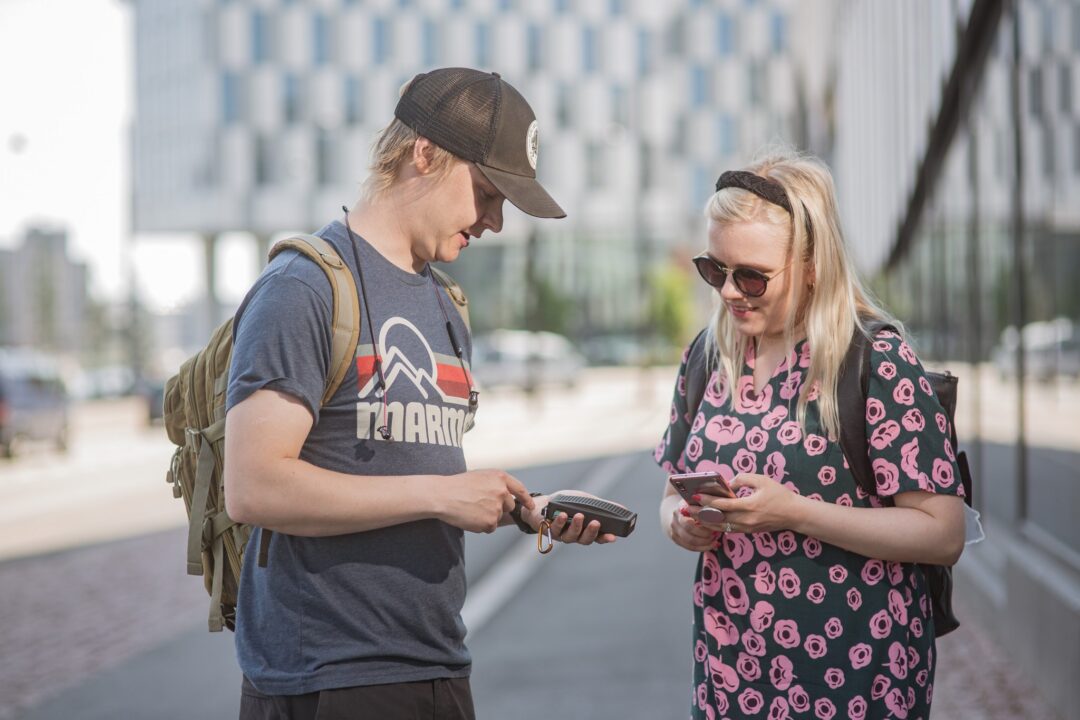
An earlier success involved citizen-led air quality measurements, where residents used simple sensors to collect data in their neighbourhoods. This initiative provided Helsinki with precise figures on black carbon and particulate matter entering the lungs. Furthermore, the project verified the benefits of friction tyres, the environmental impact of wood heating, and the importance of street cleaning. Consequently, the Finnish Meteorological Institute updated its air quality modelling system.
Read more about the air quality initiative.
The pursuit of public health in the capital is a daily endeavour. Forum Virium Helsinki remains the City of Helsinki’s dedicated partner in agile pilots, co-development, and strategic foresight—ensuring that every euro spent is invested in solutions that deliver real-world results.